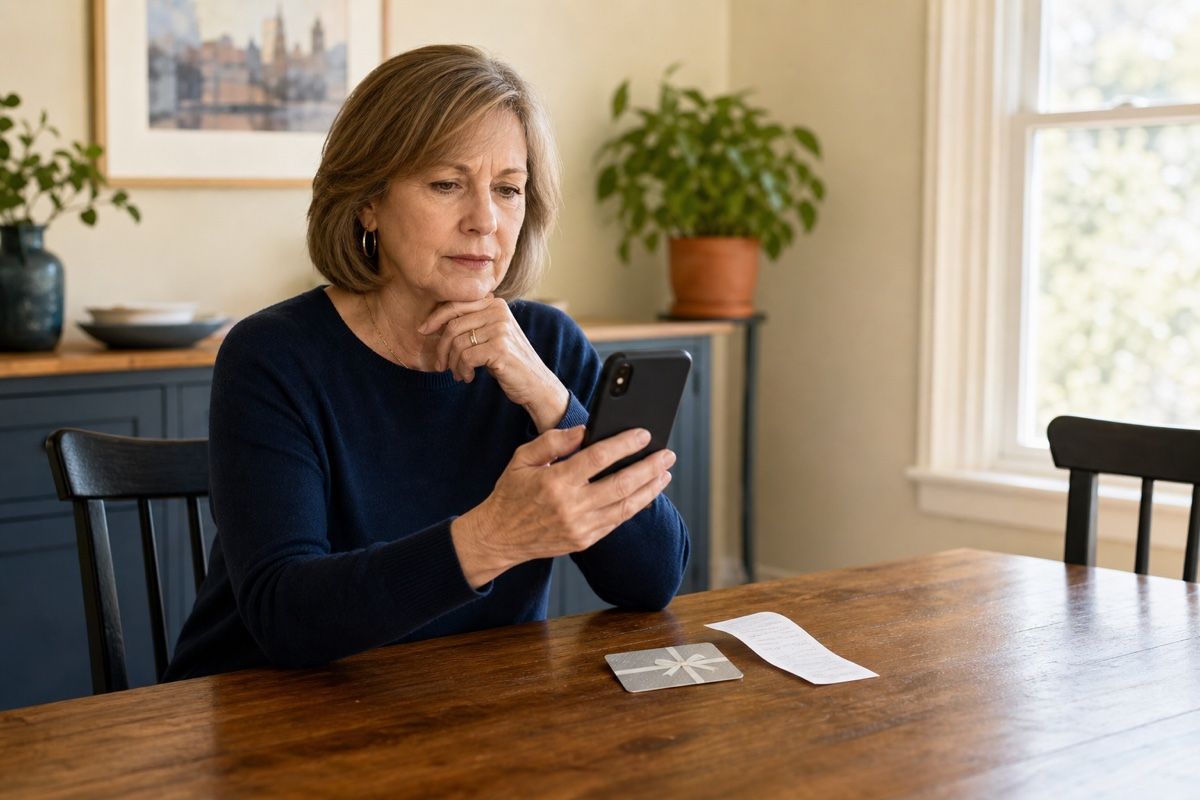
If someone you met online asks you to buy a gift card and send the number, PIN, or a photo of the back, stop before you send anything.
Already shared the card number, PIN, barcode, receipt, or a photo? Contact the gift-card issuer immediately, keep the card and receipt, save the messages, and report the account. Do not send another payment.
The request may arrive inside a convincing story. Their phone is about to be disconnected. A relative is ill. They need to pay a travel fee before they can finally visit. Their account is frozen. They promise to repay you tomorrow. Or they say the card is a small test of whether you truly care.
Whatever the story, the practical decision is the same: do not buy the card for them and do not share its details.
A gift-card request is a money request. Once another person has the usable code, they may be able to spend or transfer the value without holding the physical card. That is why gift card romance scams can move from emotional pressure to financial loss so quickly.
If you already sent a code or photo, move to what to do right now. Acting quickly may preserve more options, although no recovery is guaranteed.
If the gift card was one of several payments—or you also shared account or identity information—use the broader guide to what to do after sending money to someone you met online.
This guide is general information, not legal, financial, cybersecurity, or recovery advice.
The Shortest Answer: Do Not Send the Card or Code
You do not need to investigate the whole story before saying no.
You do not need proof that the person is a scammer. You do not need to win an argument about whether their emergency is real. You only need to recognize that sending gift-card details to an online romantic interest is outside a reasonable dating boundary.
Do not send:
- the physical gift card
- the card number
- the scratched-off PIN or claim code
- a photo of the front or back
- a photo of the receipt or barcode
- a screenshot from an electronic gift-card email
If you have not bought the card, do not go to the store “just to see.” A person applying pressure may stay on the phone, tell you which card to choose, ask you to visit another retailer if a cashier intervenes, or insist that you send a photo from the parking lot.
End the errand instead.
You can say:
“I do not send gift cards, codes, or money to people I have met online.”
Or:
“I am not going to make this purchase. Please do not ask me again.”
A respectful person may be disappointed, but they will not punish you for protecting your money.
Why Gift Cards Are Useful to Scammers
Gift cards are designed to be easy to give and redeem. Those same qualities can make them attractive to scammers.
The Federal Trade Commission warns that anyone who tells you to pay with a gift card is a scammer. After getting the card number and PIN, the person can take the value while remaining far away from you.
Unlike a normal purchase from a business, there may be:
- no product or service to dispute
- no verified identity attached to the person receiving the code
- no reason for the recipient to possess the physical card
- little time before the value is redeemed
- no guaranteed way to reverse the loss
The brand on the card does not make the request safer. A person may ask for cards connected to technology, gaming, retail, restaurants, or online marketplaces. They may switch brands if one card is unavailable.
The important pattern is not which card they choose. It is that a romantic interest is directing you to convert your money into a code and hand that code to them.
A gift is different from a demanded payment
Buying a birthday or holiday gift card for someone you know well is an ordinary choice. The warning sign here is the combination of distance, romantic trust, and instructions to reveal the redeemable details.
Be especially cautious when the person:
- chooses the card brand and amount for you
- tells you to buy several smaller cards
- stays on a call while you shop
- warns you not to explain the purchase to the cashier
- asks you to scratch the card and photograph it immediately
- says the physical card can stay with you because they only need the code
That last point can make the request sound harmless: “You still have the card.” But the code may be the valuable part. Keeping the plastic does not protect the balance after usable details have been shared.
You also do not need to decide whether the request technically counts as a “gift.” If the other person selected the payment method, supplied the emergency, and created the deadline, treat it as a financial demand.
How the Request Is Made to Feel Reasonable
Romance scams rarely begin with a blunt demand from a stranger. The request usually comes after attention, daily messages, affectionate language, or plans for a future together.
By the time gift cards appear, saying no can feel like abandoning someone you know.
“My phone or internet will be cut off”
They say a gift card is the only way to keep communicating. This turns your desire to preserve the relationship into pressure to pay.
“I cannot access my bank account”
They may claim to be traveling, deployed, working offshore, waiting for an inheritance, or locked out after fraud. The story explains why a capable adult supposedly needs an online romantic interest to buy a retail gift card.
“It is for my child or relative”
The request may be framed as a birthday present, medical need, school expense, or emergency for someone you have heard about in earlier conversations.
“It is a small favor”
They may begin with a modest amount and repay it—or claim they will—to make a larger request feel normal later.
“Do not tell anyone”
Secrecy may be presented as privacy, embarrassment, romance, or fear that your family will “misunderstand us.” In practice, it keeps you away from outside perspective.
“If you trusted me, you would help”
This is pressure, not proof of intimacy. Affection does not require you to bypass your financial boundaries.
These stories can be detailed and emotionally believable. The story does not change the payment method. For the wider pattern, review the romance scam warning signs.
What to Say When Someone Asks
Short answers work better than long defenses. A long explanation gives the other person more material to challenge.
Try:
“I do not buy gift cards for anyone I know only online.”
“I do not send card numbers, PINs, or payment codes.”
“I am stepping away from this conversation.”
“I will not keep this request secret.”
If they continue, you do not owe another round of negotiation. Save the messages, then block or report the account if that feels appropriate.
Watch what happens after your boundary. Someone using manipulation may:
- create a tighter deadline
- lower the requested amount
- switch to a different card or payment method
- become angry or wounded
- claim you ruined their only chance
- threaten to leave
- ask you to borrow from family or a credit card
- offer a check, transfer, or repayment that has not cleared
Each new version is still a money request. The parent guide, what to do if someone you met online asks for money, covers the broader stop-and-report steps.
If You Bought the Card but Have Not Shared the Code
If the card is still in your possession and you have not revealed any identifying details, pause there.
- Do not scratch off or expose the PIN for the other person.
- Do not send photos of the card, receipt, packaging, or barcode.
- Keep the card and receipt together.
- Contact the retailer or the card issuer using the official number or website printed on the card or packaging.
- Ask about the current return, balance, and fraud policies for that specific card.
Policies differ. A retailer may not accept a return, and an issuer may have its own rules. Do not rely on instructions or phone numbers supplied by the person who requested the card.
If the person is waiting for a photo, stop responding while you contact someone outside the conversation. A friend, adult child, sibling, or other trusted person can help you hold the pause.
If You Already Shared the Code or a Photo
Act promptly, but do not assume the situation is hopeless.
1. Contact the gift-card issuer
Use the contact information printed on the card, packaging, or issuer’s official website. Explain that the card details were obtained through a scam.
Ask:
- Has the value been redeemed?
- Can the card or remaining balance be frozen?
- Is there a fraud claim or refund process?
- What card, receipt, and transaction details do you need?
The FTC advises contacting the company that issued the card, telling it the card was used in a scam, and asking for your money back. Recovery is not guaranteed, but reporting quickly is worthwhile.
Issuer instructions vary. For example, Apple’s gift-card scam guidance tells consumers not to provide gift-card numbers to people they do not know and explains how to report a scam involving Apple gift cards. Google Play’s guidance similarly warns that gift cards should be used only for eligible Google Play purchases and provides a scam-reporting path.
2. Keep the evidence
Save:
- the physical card and packaging
- the receipt
- photos or screenshots you sent
- messages and emails
- profile name, username, and link
- phone numbers and email addresses
- dates, amounts, and card brand
Do this before deleting messages or blocking the account, when it is safe and practical.
3. Report the account and fraud
Report the profile or conversation to the dating app, social platform, or messaging service where it occurred.
You can also file a report at ReportFraud.ftc.gov. If you want a step-by-step reporting sequence, use how to report a romance scammer.
If you are outside the United States, use your country’s consumer-protection, police, or national fraud-reporting service for the appropriate reporting path.
4. Tell someone you trust
Scammers benefit when the situation stays private. Ask someone calm to sit with you while you contact the issuer and organize the records.
Being targeted is not evidence that you are foolish. It means someone used attention, urgency, and a payment method designed to move value quickly.
What Not to Do Next
After a gift-card loss, the next message may claim that one more payment will fix everything.
Do not:
- send another card to “release” or replace the first one
- pay a fee to unlock a refund
- accept a check and send part of it back
- share bank logins, passwords, or authentication codes
- allow remote access to your phone or computer
- pay a stranger who promises guaranteed recovery
- threaten or arrange an in-person confrontation
Someone may contact you later claiming to be an investigator, issuer employee, hacker, lawyer, or recovery specialist. Verify any contact independently through an official website or phone number. Do not pay an upfront fee to a person who found you through messages or social media.
If the original person switches from gift cards to crypto, wire transfer, payment app, cash, or account access, the boundary remains the same: do not send money or financial information.
A Gift-Card Romance Scam Checklist
Before you send anything
- Is someone I know only online asking for a gift card?
- Do they want the number, PIN, barcode, receipt, or photo?
- Is there urgency, secrecy, guilt, or a test of love?
- Are they directing the purchase step by step?
- Have they explained why ordinary help from people in their real life is impossible?
- Have I shown the request to someone outside the relationship?
One clear gift-card payment request is enough reason to stop.
If you already sent details
- Contact the issuer immediately through an official channel.
- Keep the card, packaging, and receipt.
- Ask whether value remains and whether it can be frozen or returned.
- Save the profile, messages, dates, and payment details.
- Report the account to the platform.
- Report the fraud to the FTC.
- Tell someone you trust.
- Refuse further payments and recovery fees.
You can also use the scam red flags checklist to review the surrounding relationship pattern.
Official Resources
Official guidance checked June 24, 2026:
- Federal Trade Commission: Avoiding and Reporting Gift Card Scams
- FTC: ReportFraud
- Apple Support: About Gift Card Scams
- Google Play Help: Gift Card Scam Guidance
Issuer policies and reporting processes can change. Follow the current instructions from the company that issued the card.
Your Next Step
Keep the boundary simple: do not send gift cards, codes, account access, or more money to an online romantic interest.
If details have already been shared, focus on the next useful action rather than replaying every message: contact the issuer, keep the evidence, report the account, and bring another person into the situation.
For broader guidance on safer pacing, privacy, and online contact, read online dating safety after 50 or return to the Safe Dating & Scam Protection hub.