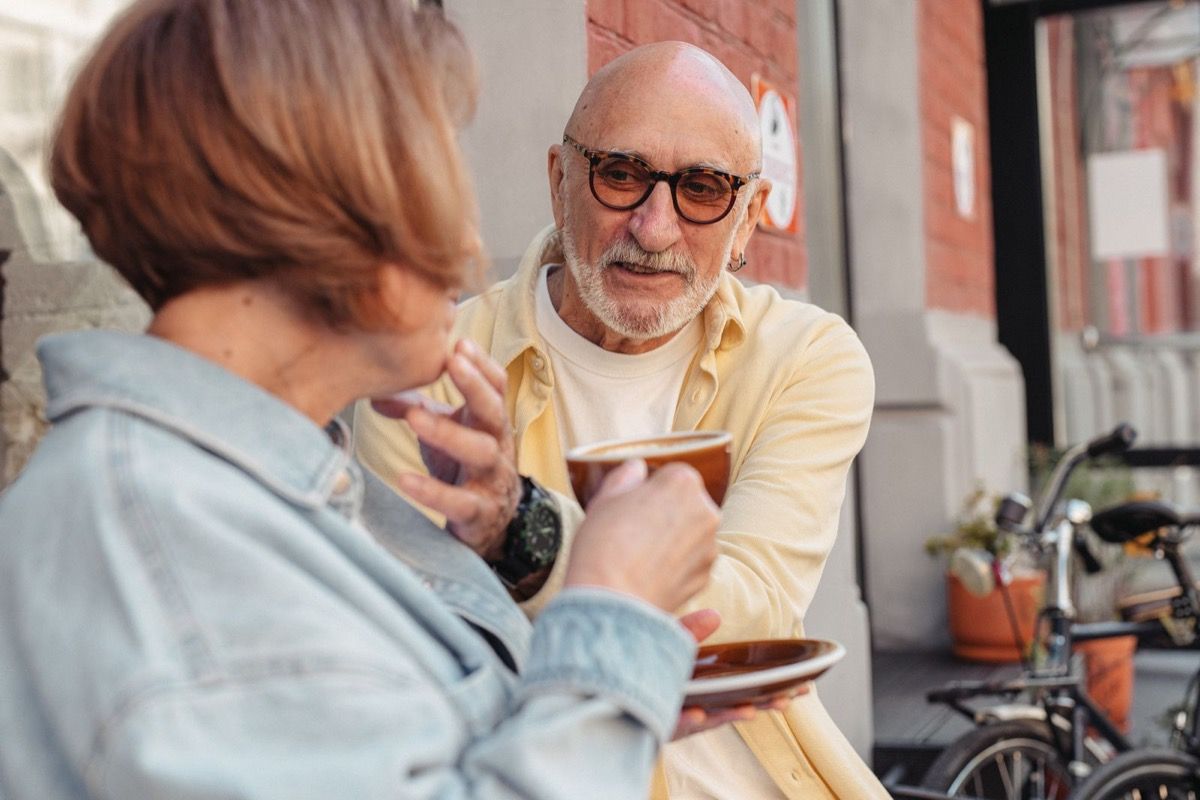
You agreed to meet someone for coffee. That took courage, even if it doesn’t feel like it did.
Now the practical questions stack up. Which cafe. What time. Whether to get there first or arrive together. How long you are supposed to stay. What to do with your hands while you wait.
These are not trivial concerns. Not when you haven’t sat across from a stranger in a dating context for ten, twenty, or thirty years. The last time some readers did this, they drove to a restaurant without checking their phone first because phones did not do that yet.
This guide covers the logistics: the parts no one thinks to explain because they assume everyone already knows. Where to go, how long to stay, what actually happens when you get there, and how to leave well regardless of how it goes.
If you are still deciding where these first meetings should come from, the broader guide to meeting people after 50 is the better starting point. This coffee-date guide sits inside the Start Again path for readers who already have a first meeting on the calendar.
Why Coffee Works Better Than Dinner for a First Meeting
Dinner asks a lot. Two hours minimum, a shared menu negotiation, alcohol decisions, the bill ritual, and no clean way to leave if you realize within fifteen minutes that this is not going to work. You are locked in.
Coffee asks almost nothing.
You order a drink that costs less than a sandwich. You sit. You talk. You leave whenever you want without anyone flagging down a server or splitting a check. The entire exchange can last forty-five minutes and feel complete rather than cut short.
For someone returning to dating after a long absence, and many readers here have been away for a decade or more, that low commitment matters enormously. You don’t need to invest an entire evening and a restaurant’s worth of performance anxiety to find out whether you want to see this person again. One cup of coffee gives you enough information to decide what comes next.
There is a concern that coffee feels too casual, that you should be offering dinner to show you are serious. But serious is what a second date is for. A first meeting is a threshold check: can we hold a conversation, and do I want to see this person in a different setting? Coffee gives you that answer without the performance overhead that dinner demands.
Choosing the Right Place
The cafe matters less than most people think, but it does matter a little. Three things: somewhere you can hear each other, somewhere with comfortable seating, and somewhere public enough that you are not isolated with a stranger.
What to Look For
A moderate noise level helps more than silence. Total quiet makes every pause feel weighted; a background hum of espresso machines and other conversations gives you acoustic cover. You want to be able to speak at a normal volume without leaning in.
Comfortable seating means actual chairs or a booth, not high stools at a communal counter. You are going to be there for an hour. Your back will have opinions.
Parking or easy transit access sounds obvious, but check it beforehand. Circling blocks looking for a spot with your heart already racing is not the start you want. Knowing exactly where you will park removes one variable from a morning that already has plenty.
Avoid anywhere too dark, too intimate, or too empty. A dimly lit wine-bar atmosphere at 10 AM is odd. A completely empty cafe means you are the only conversation in the room. Moderate foot traffic is what you want. Enough people around that you feel settled into a public place, not so many that you are fighting for a table.
When Familiar Beats Fancy
If you have a cafe you already go to, somewhere you know the layout, the parking, the noise level, the best seat, use it. Familiarity is an underrated advantage when everything else about this morning is unfamiliar. You already know where the bathroom is. You already know what you will order. Those two small certainties free up mental space for the actual conversation.
The exception: don’t choose somewhere you went regularly with an ex-partner if those associations are still heavy. A fresh location serves you better than a loaded one, even if the loaded one is more convenient.
Timing and Pacing
Mid-morning on a weekday or a Saturday works well. You are alert, the cafe is calm, and you have the rest of the day as a natural boundary. Sunday mornings can work too, though some cafes are crowded with brunch traffic that makes conversation harder.
Avoid late afternoon if your energy typically drops after three. This is practical, not precious. You want to show up as the version of yourself that can actually engage, not the one counting minutes until you can be home on the couch. Scheduling around your own rhythms is one of the few advantages of doing this at an age where you actually know your rhythms.
Plan for forty-five to ninety minutes. One coffee, maybe a second if things are going well. Tell yourself before you arrive that an hour is plenty, and anything beyond that is a bonus. Building in a natural endpoint, such as “I need to be somewhere at noon,” gives both of you a graceful exit that does not require anyone to be the person who ends the date.
If open-ended time commitments make you anxious, a weekday morning is your friend. You have work, errands, a lunch plan, or whatever real or invented constraint gives you a finish line. That structure isn’t avoidance. It is good planning.
What Actually Happens: A Realistic Walkthrough
The mystery of what a coffee date looks like, minute by minute, is part of what makes it nerve-wracking. Here is what typically happens, stripped of romance-novel staging.
You arrive. Getting there five minutes early is fine and often calmer than arriving simultaneously. You find a table, maybe order your drink, settle your coat. When they walk in, you are already situated rather than both of you hovering at the entrance trying to figure out the ordering system together.
You order. Whatever you normally drink. This is not the moment to study an unfamiliar menu or ask detailed questions about oat milk alternatives. If they arrive after you and you already have your drink, a simple “I went ahead and grabbed mine. Go ahead and order whatever you like” handles it. If you arrive together, walking to the counter side by side gives you something to do during those first thirty seconds when your mouth has forgotten how to make words.
The first few minutes are awkward. They almost always are. You say hello. You comment on something neutral. The cafe, the weather, how easy or hard it was to find parking. These are not meaningful observations. They are bridges, and they serve their purpose perfectly well.
You settle in. Somewhere between minute five and minute ten, the initial tension drops. Not always dramatically. But enough that you start talking about actual things: what they have been doing lately, what brought them to this app or this introduction, something they mentioned in a message that you were curious about.
The middle is just conversation. Thirty to sixty minutes of talking. Some stretches will flow; others will stall briefly. You are not performing. You are finding out whether this person’s company is something you enjoy or something you are enduring.
If the conversation itself is what makes you nervous, what to talk about once you are face to face gives you a few grounded places to begin.
You wrap up. One of you mentions the time, or your cup is empty and neither of you moves to order another. The ending does not need to be a dramatic declaration. A natural wind-down is fine. More on how to handle the ending below.
Staying Comfortable When You Are Nervous
Nervousness before a coffee date is not a problem to solve. It means you care how this goes, which is reasonable. But there are practical things that keep nerves from running the entire experience.
Arrive with one opening topic. Not a script, not a list of interview questions. Just one thing you can say or ask in the first minute that is not “So… how are you?” Something you noticed in their profile, something from your messages. “You mentioned you’ve been hiking more this year. Where have you been going?” gives both of you somewhere to land immediately.
The first few minutes will be slightly stilted. This doesn’t mean the date is going badly. It means neither of you has done this in a while. Acknowledging it can even help: “I’ll be honest, I haven’t done this in a long time” is disarming rather than weak. Most people over 50 feel relieved when someone names the awkwardness instead of pretending it is not there.
Give yourself permission to be awkward. It passes faster when you stop fighting it.
Walking to the counter, choosing a drink, paying: that small ordering ritual gives you something to do with your body while your nervous system adjusts to being in a room with a stranger you are trying to impress. Let it serve that purpose. Don’t rush through it.
Have an exit phrase ready. Not because you expect to need it, but because knowing you can leave reduces the trapped feeling that amplifies anxiety. Something simple works: “This has been really nice, but I need to head out.” Having the words pre-loaded means you never feel stuck, even if you never use them.
One more thing that helps: keep your expectations flat. You’re not here to find your person. You’re here to drink coffee and see whether you enjoy talking to this particular human being. That is a much smaller ask than a life decision, and treating it that way makes the whole thing more manageable.
A brief practical note on meeting someone for the first time: tell a friend where you are going, keep your own transport, and meet in a public place. The first date safety checklist covers the full preparation if you want it, but those three basics are enough for most coffee meetings.
How to End Well
The ending is the part most people dread because it requires a small decision under mild social pressure. Do I want to see them again? Do they want to see me? What do I say?
Keep it simpler than your brain wants to make it.
If you want to see them again, say so before you leave. You don’t need to be coy or strategic about timing. “I really enjoyed this. Would you be up for doing something again sometime?” is direct and clear. If they say yes, suggest something specific within the next few days: a walk, lunch, a slightly longer activity. The specificity signals genuine interest better than a vague “we should do this again.”
If you do not want to see them again, you don’t need to announce that at the table. A warm goodbye works: “Thanks for meeting me, it was nice to talk.” If they reach out afterward, a brief message does the job: “I had a nice time, but I did not feel a romantic connection. I wish you well.” Kind, clear, done.
The question of who pays. For coffee, the simplest approach is each person covers their own drink. If one of you grabbed both coffees at the counter, the other can say “let me get the next one” or simply thank them. The amount is small enough that this should not become a negotiation. Do not let a four-dollar decision carry the weight of a values statement.
Walking out together. You will probably leave at the same time, which means a brief walk to the door or the parking lot. A short hug or a handshake if it feels natural. A smile. Then you go to your separate cars and sit there for a moment processing what just happened.
When Coffee Leads to Something More
A good coffee date doesn’t need to lead anywhere. Sometimes it simply confirms that you can meet someone new and survive the experience intact. That confirmation has value on its own, especially if you have been away from dating for years and were not sure you could do this at all.
But if the conversation was easy and you both want more time together, the natural next step is something slightly longer or slightly more active. A walk through a neighborhood you both like. Lunch somewhere with real food. A weekend morning at a farmer’s market. You are graduating from “can we talk for an hour” to “can we spend a few hours together and still enjoy it.”
Do not leap to a full evening date immediately unless both of you are clearly enthusiastic. The graduated approach, coffee, then a longer daytime activity, then maybe dinner, gives both people time to build comfort without the pressure of an implied intimate evening. After 50, many people are managing their energy across a full life that already has plenty in it. A slower pace respects that.
If you are looking for other format ideas for that second or third meeting, first date ideas after 50 covers a wider range of comfortable settings. And if the coffee date went well but you are unsure about follow-up timing or who should text first, who should follow up after a first date addresses exactly that.