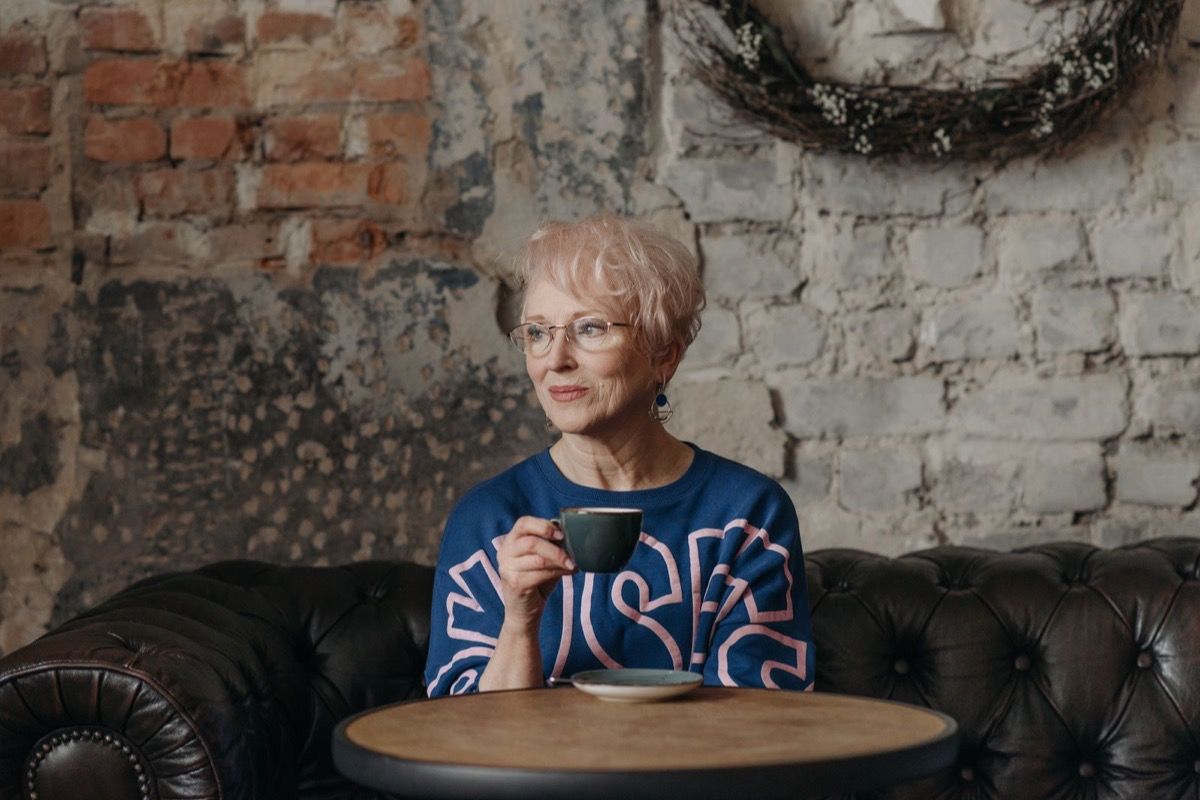
A reader named Diane — she gave me permission to use her first name — put it this way: “I’m 63 and I have a really good life already. I’m not… I don’t need someone to complete it or whatever. I just want a person to sit next to while I’m living it.” She had been on two dates in six months and was fine with that number.
Most advice about dating after 60 is written by people who have never done it, or by platforms that need you to keep swiping. The result is a strange mix of condescension (“It’s never too late!”) and urgency (“Don’t waste another day!”) that matches nobody’s actual experience.
Here is what we hear from readers instead: the desire for connection is real, the logistics are different from a decade ago, and the timeline is nobody’s business but yours. If you are weighing whether to start — or whether to keep going — this is the honest version.
What Actually Shifts After 60
Your Time Is No Longer Up for Negotiation
In your 50s, dating competed with career, kids still partly at home, and the relentless logistics of mid-life. By 63 or 65, that particular chaos has eased — but what replaced it is a life you built on purpose. The morning walk. The pottery class. The Thursday grandkids pickup. The trip to Portugal you planned with your college roommate.
None of that is filler. It is structure you chose, and you are not rearranging it for someone you met last Tuesday on Hinge.
One reader from our community described her approach: “I can do Saturday afternoon coffee or Wednesday evening dinner. That’s it. If that is not enough for someone, we just want different things.” She had been dating for eight months at that point. She was perfectly content with the pace.
This surprises people who expect dating to be urgent. At 60, urgency is the wrong gear. You have — what, twenty-five, thirty years left? More? Plenty of time to find the right person without auditioning someone new every week.
The Dating Pool Is Smaller. Good.
Yes, smaller. Fewer people. Fewer matches. Fewer options on any given Tuesday night in any given city.
But also: fewer people who have no idea what they want. Fewer people performing a version of themselves. Fewer people who will waste three months of your time being ambivalent about whether they actually like you.
What the pool looks like at 60:
- More widowed people (which changes the emotional texture of early conversations — grief is present in ways divorce is not)
- More people who can articulate what they want within the first two coffee dates
- More geographic constraints, because driving 45 minutes each way for dinner stops being romantic and starts being a logistics question about energy
- Less posturing. A 64-year-old man who shows up in a clean shirt and asks genuine questions is doing more than most of what you encountered at 45
A therapist I interviewed for a piece last year — she specializes in relationship transitions for midlife and older adults — said something that stuck with me: “The ones who do well after 60, they all describe this moment where they just… stopped shopping and started showing up.” I have been thinking about that phrasing for months. Stopped shopping. Started showing up. It reframes the whole thing from consumer behaviour to participation.
What Has Not Changed (And People Keep Getting Wrong)
You still notice someone’s hands. The way they hold a pen or wrap both palms around a mug. You still feel a pull when a conversation gets unexpectedly honest — when someone says something real and the room gets quieter for a moment.
Physical desire does not expire at 60. Neither does the wish to be seen clearly by another person. Honestly, can we retire the genre of article that treats attraction after 60 as heartwarming? “Grandma found love again!” as if you are a golden retriever who learned a new trick. You are a grown woman who wants closeness. That is not news. That is Tuesday.
What also has not changed: your ability to read a room. At 25, you missed signals constantly. At 62, you notice within twenty minutes whether someone is genuinely interested or filling an evening. You know when chemistry is there and when you are trying to manufacture it out of politeness.
I will make a comparison that might sound odd: dating in your 60s is a bit like driving a car you have owned for twenty years. You know exactly how the brakes respond, what that weird rattle at 70mph means, when to push it and when to ease off. You are not a better or worse driver than you were at 40 — but you know this car now. That self-knowledge is not a consolation prize for aging. It is the actual competitive advantage.
The Practical Part: How to Start
Apps Are Fine. They Are Also Not the Only Door.
I will save you the suspense: most people over 60 who date use at least one app. Usually Bumble, Hinge, or Match — the ones with enough users in this age range to make scrolling worthwhile. OurTime exists but gets mixed reviews from readers who find it too narrow and too heavy on the “senior” branding.
Here is what works at this stage: pick one. Just one. Look at profiles for three or four days without messaging anyone. You will develop a sense of who is there, what the norms are, how people present themselves. Then write a profile that sounds like you explaining yourself to a friend over lunch — not a resumé, not a joke, just honest. “I cook more than I should, I walk every morning regardless of weather, and I am looking for someone to have unhurried dinners with” does more work than four paragraphs about your love of travel and laughter.
The first week will feel strange. The interface is clunky, the experience of being evaluated by strangers is uncomfortable, and you will probably want to quit by day three. That is normal. Give it three weeks before you decide it is not for you.
The Offline Paths Nobody Talks About
Apps get all the attention because they are measurable. But the people I hear from who found lasting connections after 60? Roughly half met through offline channels.
The common thread: they made themselves visible in low-pressure settings. Book clubs. Hiking groups. The volunteer board at the library. A cooking class at the community college — which, by the way, has an excellent ratio of interesting people to time invested.
The key move is small: tell two or three friends you trust that you are open to meeting someone. Not that you are desperate. Not that you need help. Just that the door is open. People want to introduce people. They just need permission.
A reader named Tom, 66, from Portland, told me he met his partner because a mutual friend seated them next to each other at a dinner party — deliberately, without announcing it to either of them. “I would never have swiped on her,” he said, then caught himself. “That sounds terrible. I mean — we just look better in motion than in photos. Both of us. The app version of us wouldn’t have worked.”
I think about that a lot. The app version of us. How much gets lost when you flatten a person into five photos and a bio.
The Expectations That Trip People Up
Timelines
If you are imagining a steady relationship within three months of starting, recalibrate. Most people I hear from took six months to a year of occasional dating before finding someone they wanted to see regularly. Not because something was wrong — because two people with full, established lives take longer to find a shape that fits both.
That is fine. You are not behind.
The Comparison Problem
Your reference point is probably a long marriage. Or the way falling in love felt at 32 — consuming, destabilizing, identity-altering. Dating at 62 does not feel like that. It feels quieter. Less like falling, more like choosing.
Some people find this disappointing at first. I did, briefly, when I started paying attention to how readers described their experiences. Where was the drama? The sweep? Then I realized: the people who were happiest were the ones who had stopped waiting to be swept. What they described instead — “we just kept wanting to have dinner again” — was less cinematic but more durable. The intensity they remembered from their 30s was partly instability dressed up as passion. They were not nostalgic for the feeling. They were nostalgic for the certainty that came with it. And certainty, it turns out, builds just fine at a slower pace.
Energy Is Finite Now
Two dates in one week will drain you in ways it would not have at 50. This is not a character flaw. Treat dating energy like a budget rather than an infinite resource. One good conversation per week is plenty. Two mediocre ones in three days will make you want to quit entirely.
Volume
You will not have 40 options. You might have four. The math is discouraging until you remember that you only need one to work — and four intentional people produce better conversations than forty ambivalent ones.
What You Should Never Compromise On
A smaller dating pool is not a reason to lower your standards. I want to be direct about this because the cultural message aimed at older daters — especially older women — is relentless: be grateful, be flexible, be less picky. No.
Respect for your time. If someone cancels twice without rescheduling, they are telling you something. Believe them.
Directness. You do not have patience left for guessing games. If someone cannot tell you what they want after three dates, they either do not know or do not want to say. Neither is your problem to solve.
Safety. Physical and emotional. Always. A smaller pool does not create an obligation to tolerate behaviour that makes your stomach tight. (Our safe dating guide covers the practical specifics.)
Compatibility with your actual life. Someone who expects you to abandon your routines, stop seeing your friends, or reshape your schedule around their preferences is offering displacement. Not partnership.
If anyone tells you your standards are “too high for your age” — and someone will — treat that as information about them, not feedback about you.
When It Is Not Going Well
Some early dates will be bad. Flat conversations. Awkward silences. The moment you realize within five minutes that this is going nowhere but you still have a full cup of coffee to get through.
That is not evidence you missed your window. It is one bad Tuesday afternoon.
A more useful frame for the first few months: you are learning, not producing. Learning what this feels like in your body at this age. Learning what kinds of people you respond to. Learning your own energy patterns. That information is valuable even when individual dates are forgettable.
Signs your approach needs adjusting:
- Every conversation feels like a job interview → you are asking too many questions and revealing too little
- You feel wiped out after every meeting → you are scheduling too often, or choosing settings that require too much performance (loud restaurants, group activities when you needed one-on-one)
- You keep meeting people who want fundamentally different things → your profile or early messages are not communicating your intentions
Signs you should pause — not quit, pause:
- Dating consistently makes you feel worse about yourself rather than neutral or curious
- You realize you are doing this to fill a gap that is really about loneliness, grief, or boredom rather than wanting a specific kind of connection
- The pressure to keep going is coming from someone else — a well-meaning friend, a daughter, your own impatience — and it does not match what you actually feel
A reader named Carol, mid-60s, told me she paused for four months after a string of disappointing dates. When she came back, I asked what was different. “I don’t know, I just… I actually wanted to? Before, I was doing it because I thought I was supposed to. Like, my friends were all — you know. And this time I was like, no, I genuinely want to sit across from someone new.” She laughed. “That sounds so small. But it changed everything.”
It does sound small. It is not.
Is It Worth It?
I get asked this more than any other question. Usually over email, usually phrased carefully, as if the person is embarrassed to be asking. They are not. It is a completely reasonable thing to wonder.
The honest answer: it depends on why you are asking.
If you are asking because you want companionship — someone to cook with on Sundays, someone who texts you something funny at 2pm, someone whose body is warm next to yours when you wake up at 3am and the house is too quiet — then yes. Those things are available to you at 60, 65, 70. They require tolerance for some awkward dates along the way. But they exist and they are findable.
If you are asking because you feel like you should be dating — because your friends are pairing off, because your daughter keeps sending you articles (possibly this one, hi), because being alone at 63 feels like a statement you did not intend to make — then maybe not yet. You can always tell when someone is dating from obligation. It has a particular stiffness. The other person can feel it too.
Here is what I wish someone had told me earlier in my career writing about this: the question is not “is dating worth it” in general. It is “do I actually want to be doing this right now, this month, in my current life.” And both yes and not yet are fine. The answer changes. February’s no might be September’s yes. Nothing is locked.
You do not owe anyone an answer about whether you are dating. Not your kids, not your friends, not the culture at large. You owe yourself honesty about what is true today — not what was true five years ago, not what you think should be true now.
Next Steps
If you are still deciding whether to begin, how to start dating again after 50 covers the practical mechanics without assuming your decade. If you want to compare notes with the 50s experience specifically, the guide to dating in your 50s is there. And if the question underneath all of this is whether you are ready — emotionally, logistically, in your gut — the readiness self-check might be more useful right now than any dating advice.
One thing you can do today, if you feel like it: tell one person. Not everyone. One person you trust. Say it plainly: “I think I might want to start dating again.” You are not committing to anything. But I have noticed, over years of hearing these stories, that something shifts when the words leave your mouth. The idea becomes less fragile. More yours. Less like a question and more like a plan you have not made yet but might.
Margaret Huang is a senior editor at DatingAfter50. She has spent four years talking with readers about what dating actually looks like after midlife — the good parts, the awkward parts, and everything in between. She writes from conversations, not assumptions.