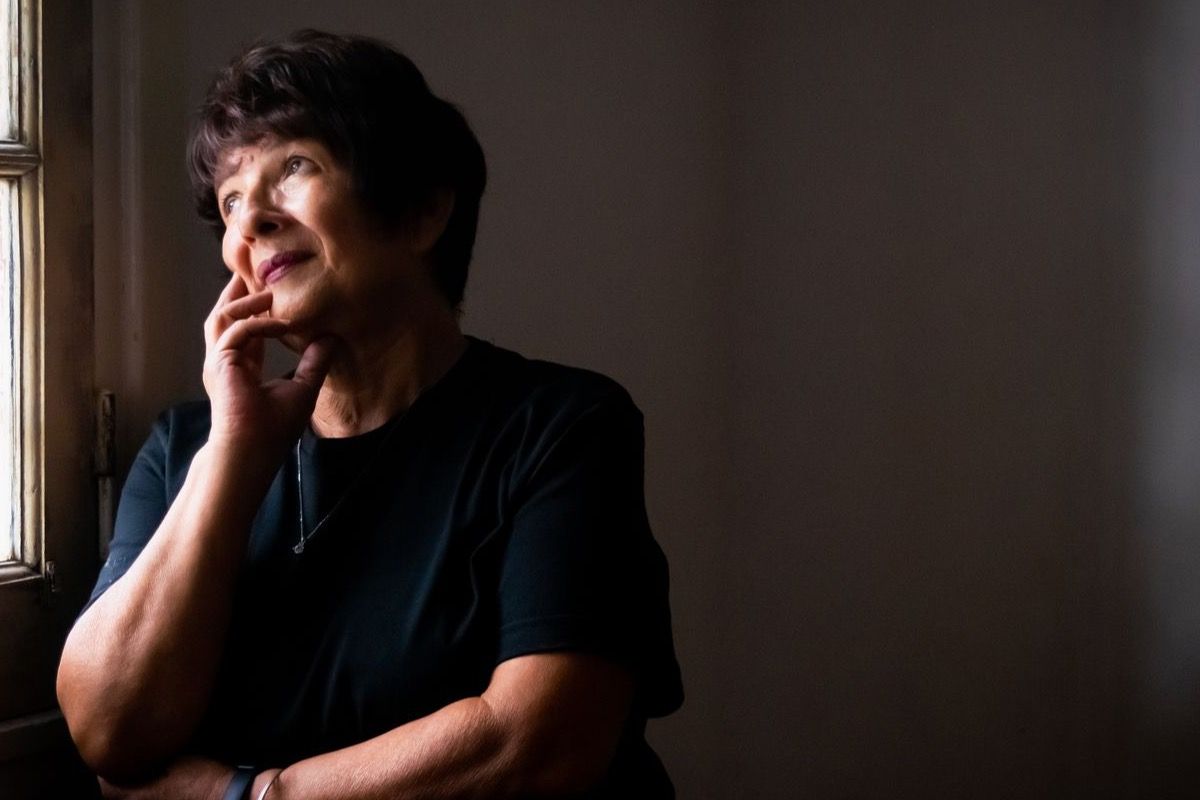
You sent a thoughtful message on a Tuesday evening. Took your time with it. Mentioned something specific from their profile, kept it warm but not over-eager. Three days later, nothing. No reply, no indication they even read it. And your mind, which has been doing this longer than you would like, starts writing the story: too old, too boring, too much baggage, too late.
That story is the problem. Not the silence itself. The silence is just someone who didn’t reply to a message, an event so common it barely registers when it happens to a friend. The story turns that silence into evidence about who you are.
If you’re over 50 and scared of being turned down, you’re not dealing with a character flaw. You’re dealing with a fear that may have been reinforced by real experience, sharpened by the pressures of dating at this stage of life, and made worse by a culture that treats romantic rejection after a certain age as confirmation that your window has closed.
This guide is for people who have already decided they want to date, or at least want to want to, but find that rejection fear is the specific barrier keeping them stuck. If you’ve already been rejected and are processing the experience rather than the anticipation of it, the guide on handling rejection when dating after 50 addresses that directly. If the whole idea of dating feels overwhelming, start with the guide to dating anxiety after 50. If you are not sure you want to date at all, the readiness self-assessment is the better first stop.
Why Rejection Hits Differently After 50
At twenty-five, rejection may have stung and then been absorbed into a busy social life. There were more casual reminders that one person’s disinterest was not the whole story. At fifty-plus, the math can feel different. People form relationships at every age, but the inner meaning of a “no” may have changed.
Several things converge to make rejection land harder now.
Identity is more settled, which makes it feel more personal. When you were younger, you were still becoming yourself. A rejection could be filed under “they just didn’t know me yet” or “I’m still figuring out who I am.” Now you know who you are. So when someone says no, it can feel like they are rejecting the finished product rather than a rough draft.
You may feel as if chances are running out. Fewer years, fewer obvious meeting places, fewer single peers in your immediate circle. When that belief is running in the background, one “no” at twenty-five was a Tuesday. One “no” at fifty-five can feel like a door closing.
Social comparison has shifted. Many of your peers are partnered. The dinner party table seats eight. Family holidays assume plus-ones. Being single and being rejected within that context can trigger a loneliness that goes beyond the rejection itself, a sense of being left behind by your entire generation, not just by one person on an app.
After divorce, even a small rejection can touch a larger story. If your marriage ended painfully, a stranger turning down coffee may land beside older feelings of not being chosen, not being enough, or having to rebuild an identity you thought was settled. That does not make every new “no” dramatic. It does mean the reaction may be carrying more history than the moment itself. If your fear connects specifically to a post-divorce identity shift, the guide on dating after divorce at 50 addresses that transition directly.
This doesn’t mean the fear is irrational. It means it may be responding to more than the present moment. The useful question is not how to make it vanish. It is what to do with it while it is still there.
What Rejection Fear Actually Looks Like at This Stage
Rejection fear after 50 rarely looks dramatic. It doesn’t usually involve crying in a parking lot or refusing to leave the house. It’s quieter than that. More sensible-sounding. It looks like the reasonable decision to not quite follow through.
You might recognize it as:
Not finishing things. You start a dating profile, get halfway through, and find a reason to close the tab. You match with someone interesting but don’t send the first message. You agree to a setup from a friend, then text to cancel the morning of.
Over-preparing as a delay tactic. Spending weeks choosing photos, rewriting your bio, researching apps. Staying in preparation mode because preparation feels safe and action doesn’t.
Interpreting ambiguity as rejection. A slow reply becomes disinterest. A short message becomes boredom. A slightly distracted moment on a date becomes “they wish they were somewhere else.” Your brain fills in the blanks with the worst possible reading because bracing for rejection feels safer than hoping.
Choosing unavailable people. Sometimes rejection fear steers people toward matches who are clearly wrong (already committed, geographically impossible, obviously incompatible) because being turned down by someone you never really wanted stings less than being turned down by someone you actually liked.
Calling it something else. “I’m just not ready.” “The timing isn’t right.” “I need to focus on myself.” These might be true. They might also be the polished, socially acceptable version of “I can’t bear the idea of putting myself out there and being told no.” The line between self-care and self-protection is genuinely hard to find from the inside.
If this is you, the pattern makes sense. Withdrawal protects you from something that genuinely hurts. It also prevents the thing you want.
If this feels less like rejection fear and more like anxiety about the whole dating process, read the guide on dating anxiety after 50. If the bigger question is whether this is the right time at all, use the readiness self-assessment.
What we’re talking about here is narrower. The rejection piece. The part that fires when someone could say no.
Separating “They Said No” From “I Am Undesirable”
This is the core work. Not eliminating rejection fear, but building a practical distinction between two very different things: a specific person declining a specific invitation, and a universal judgment on your worth as a human being.
They are not the same thing. They don’t even live in the same category. But your brain wants to merge them. Someone doesn’t reply to your message, and within seconds it becomes: “No one will ever want me.” A first date doesn’t lead to a second, and the conclusion jumps straight to: “I am fundamentally unattractive.” This leap from specific to universal is automatic, fast, and feels absolutely true in the moment.
Here’s what helps slow it down.
Name what actually happened. Strip the narrative back to the event. What happened factually? “I sent a message and did not get a reply.” “We had coffee and she said she didn’t feel a connection.” “He looked at my profile and didn’t match.” That’s all. Everything after that, including the meaning-making and self-judgment, is a story added to a fact.
Remember what you can’t know. You don’t know why someone didn’t reply. They might be overwhelmed. They might have started dating someone else yesterday. They might have a rule about message length or opening lines that has nothing to do with you. When you assign a reason, you are often guessing from the place that already hurts.
Test the logic in reverse. Have you ever declined a date, ignored a message, or lost interest in someone? Was it because they were fundamentally undesirable as a person? Probably not. It was timing, chemistry, mood, distraction, or a dozen other things that had nothing to do with the other person’s worth. The same is true when it happens to you.
Separate frequency from meaning. If you’ve been rejected multiple times, your brain treats the pattern as evidence: “See? It keeps happening. It must be me.” But frequency doesn’t prove the conclusion. It may simply prove that dating involves a lot of non-connection before there is mutual interest. The steadier daters are not people who never hear no. They are people who do not let every no override what they know about themselves.
This separation doesn’t happen once. It’s not a revelation you have and then rejection stops hurting. It’s a practice — something you do each time, imperfectly, getting slightly faster at catching the leap from fact to story. Some weeks you’ll catch it early. Some weeks you won’t catch it at all.
Practical Responses When Rejection Happens
Knowing that rejection isn’t a verdict on your worth doesn’t make the moment of rejection painless. It still stings. What helps is having specific things to do, not as a cure, but as a way to move through the discomfort without letting it calcify into avoidance.
When Someone Does Not Reply
Give it a genuine window. People get busy, distracted, overwhelmed by the sheer volume of messages on a platform. Three days of silence after a first message isn’t necessarily rejection; it might just be Wednesday. After a week, let it go. You can tell yourself: “That didn’t work out. It says nothing about the next one.”
Don’t send a follow-up asking why they didn’t reply. It rarely produces a useful answer, and it keeps you tethered to someone who isn’t engaging. Silence may feel incomplete, but it is still enough information to move on.
When a First Date Does Not Lead to a Second
Allow yourself to feel disappointed if you liked them. Disappointment is reasonable and proportional. Then ask yourself one honest question: did you feel comfortable being yourself? If yes, the date succeeded at the only thing a first meeting can actually accomplish — showing you what it feels like to be around this person. Whether they want a second date is a separate matter and not entirely within your control.
If they send a “no spark” message, a decent response is brief and warm: “Thanks for letting me know. I enjoyed meeting you and wish you well.” Then close the conversation. You don’t need to understand their reasons. You probably couldn’t, even if they tried to explain.
When Someone Says “I’m Not Interested” Directly
This one may hurt the most, and it is often the clearest form of rejection. They chose honesty instead of ghosting or slow-fading. You can respond simply (“I appreciate you being direct”) or not respond at all.
What to do with the sting: give yourself a time limit. Not to suppress the feeling, but to contain it. “I will feel this for the rest of today. Tomorrow I will do something I enjoy.” A bounded container keeps one person’s no from taking over the whole week.
When You Are Ghosted Mid-Conversation
Ghosting is ambiguous, which makes it harder to process than a clear no. Your brain wants to keep checking, keep wondering.
The most useful response is to choose a simple interpretation and move on. “They lost interest” or “something came up in their life.” Either way, you’re free. Waiting for an explanation that may never arrive can keep the rejection open longer than it needs to be.
A Script for Your Inner Critic
When the post-rejection voice starts up — “too old, too boring, too much, too damaged” — you can interrupt it with something simple and true: “One person didn’t want to continue. That’s all that happened.” You don’t need to believe it enthusiastically. You just need to say it enough times that it competes with the catastrophic version.
Dating Without Needing Rejection to Stop Hurting
Here is the uncomfortable choice: you can wait for rejection to stop scaring you, or you can date in smaller ways while it still scares you. The first option has no reliable arrival date. The second can begin with something as modest as one message, one class, or one coffee you can leave after thirty minutes.
The goal isn’t fearlessness. It’s building a way of dating that keeps the emotional stakes close to what is actually happening.
Make smaller bets. Instead of investing hours in a single match (reading their entire profile, imagining a future, composing the perfect message), send shorter messages to more people. Keep early interactions lighter. The less you invest before meeting someone, the less a non-response costs you emotionally.
Limit your exposure window. Set a timer. Fifteen minutes, three times a week. That’s enough to stay active without marinating in the possibility of rejection.
Treat early dating as information, not audition. You’re not performing for someone’s approval. You’re gathering data: do I enjoy talking to this person? Do I feel comfortable? Am I curious about them? Reframing early interactions as your assessment of them, not only their assessment of you, shifts the power balance.
Build a life that doesn’t depend on dating outcomes. Rejection is easier to absorb when it lands inside a life that already has friendships, interests, routines, and purpose. When dating is the only source of validation, every no threatens the whole structure. When it is one part of a full life, it threatens only itself.
Start with something that isn’t dating. If the idea of messaging a stranger on an app still feels impossible, start with lower-stakes social contact. Attend a class. Join a walking group. Volunteer. Talk to someone in line at the grocery store. These interactions ask less of you than dating but still rebuild comfort with being seen by new people.
You don’t graduate from this process. There may not be a point where rejection becomes painless. But there can be a point where it becomes tolerable: you feel the sting, name it, and return to your life without needing weeks to recover. That point usually arrives through repetition, not through waiting until you feel perfectly ready.
When Rejection Fear Is Telling You Something Worth Hearing
Sometimes the fear isn’t a barrier to get past. It’s information.
If your rejection fear is connected to a recent loss that still feels raw, the answer might not be “date anyway.” It might be “give yourself more time.” Not because there’s anything wrong with you, but because dating while actively grieving can make small disappointments land harder than they otherwise would.
If you notice a pattern of choosing people who are clearly unavailable (already partnered, emotionally shut down, living in another country), ask what that pattern is protecting you from. Sometimes an almost certain no from the wrong person feels easier than a possible no from someone you actually want to meet.
If the fear is so persistent that even the smallest step feels genuinely impossible, not uncomfortable but impossible, over a period of weeks or months, that is worth exploring with someone who understands later-life transitions. Not because you need fixing, but because fear at that intensity may be connected to something older than dating.
Rejection fear exists on a spectrum. Where you fall on it determines whether the practical approaches in this guide are enough or whether you need something else first. If you’re uncertain whether your fear signals something deeper or is simply the expected discomfort of putting yourself out there again, the readiness self-assessment can help you sort through that question more carefully.