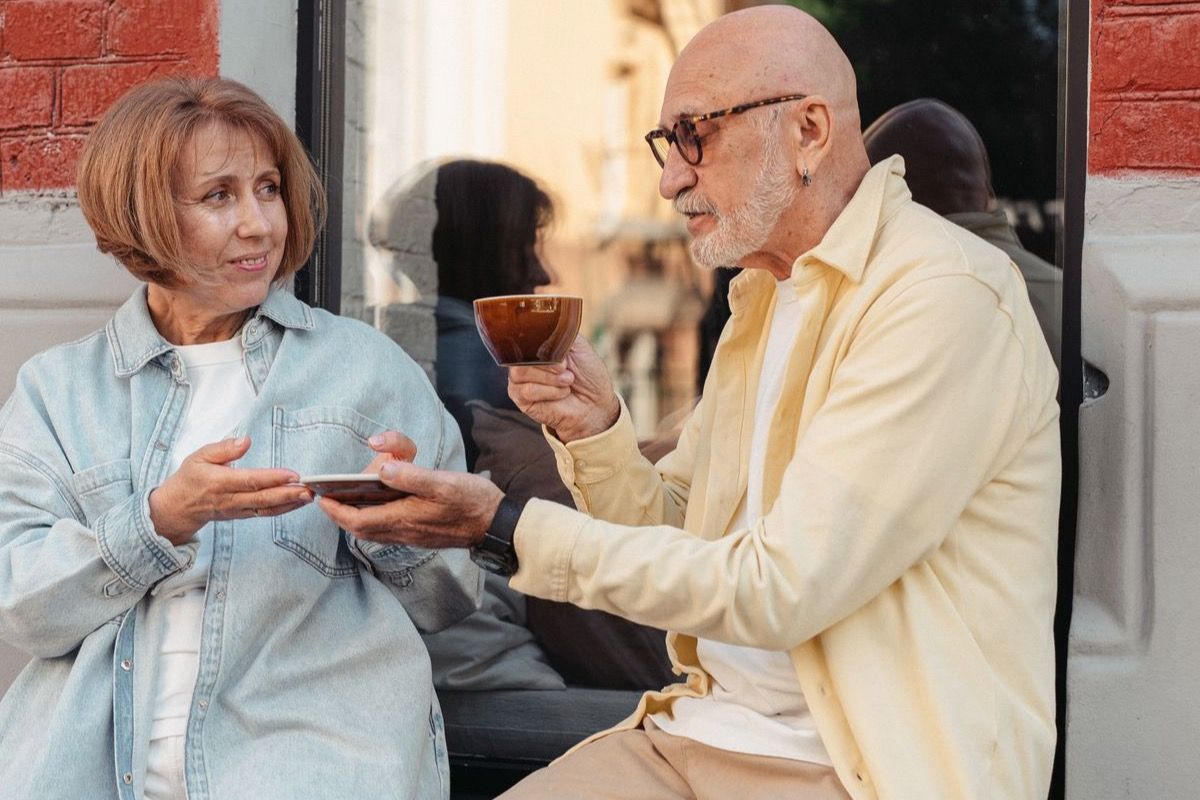
You have a date. Maybe it is coffee on Saturday, maybe a walk through that park near the library. You know where you are going. What you do not know is what you are going to say once you sit down across from someone and the small talk window opens.
This particular anxiety hits differently after 50. You have decades of conversation behind you. Dinner parties, work meetings, neighbors at the block party. You can talk to anyone. But a first date carries a subtext the others lack: you are both deciding whether you want to see each other again. That quiet awareness can make even naturally talkative people go blank.
Here is what helps: you do not need fifty scripted questions. A handful of good ones. A sense of when to follow up. Some comfortable ways to redirect if the conversation goes somewhere you are not ready for. The rest is listening, which you already know how to do.
This guide is part of the Start Again After 50 path. If you are still figuring out where to meet people, how to meet singles after 50 covers the bigger picture. If you already have a date planned but are not sure about the setting, first date ideas after 50 handles venues. If you want the broader subject map rather than specific phrasing, what to talk about on a first date after 50 covers topic territory. This picks up where those leave off: you are there, you are seated, now what.
Why First Dates Feel Different After 50
The stakes feel different because they are different. At 25, a bad first date was a funny story for your friends by Monday. At 55 or 65, you might be meeting someone after years alone, after a divorce that took everything out of you, after losing a spouse you thought you would grow old with. The emotional weight of trying again is real. Pretending otherwise does not make the date easier.
What does make it easier: remembering that this is a conversation, not an evaluation. You are not being tested. Neither are they. You are both showing up to find out whether you enjoy talking to each other for an hour. That is a much smaller question than “is this my person” — and keeping it small is exactly what lets you relax enough to actually be present.
One more thing. The person across from you is probably nervous too. They are also wondering what to say. That shared uncertainty is a kind of common ground, even if neither of you names it out loud.
Conversation Starters That Feel Natural
The first few minutes matter less than people think, but they set the tone. A good opening question does two things: it signals genuine curiosity, and it gives the other person something easy to work with. You are not looking for depth yet. Warmth is enough.
A few that work well for the first five minutes:
“What have you been up to today?” Simple, present-tense, no pressure. Their answer tells you whether they are relaxed, rushed, or have something on their mind.
“Have you been to this place before?” If you are at a cafe or restaurant, this is a natural entry. It can lead to talking about the neighborhood, food preferences, or how they found the place.
“What does a good weekend usually look like for you?” This invites storytelling rather than a one-word answer. You learn something real about their life without asking anything invasive.
“Is there something you have been enjoying lately — a book, a show, a project?” Open enough to let them pick their own direction. Some people will talk about gardening, others about a documentary series, others about a trip they are planning.
What Makes a Good Opening Question
Three principles rather than rules. First, it should be open-ended — anything answerable with yes or no tends to land flat. Second, it should come from curiosity rather than performance. You are not trying to seem interesting; you are trying to be interested. Third, it should leave room for them to choose what to share. “Tell me about your family” is too broad and too personal for minute three. “What are you reading?” lets them decide how much to offer.
The questions that fail are usually the ones that sound lifted from a list. “What is your love language?” “Where do you see yourself in five years?” These belong in a therapist’s office or a job interview. Not a Saturday coffee. Ask like a person, not a questionnaire.
Questions That Open Real Conversations
Once the opening minutes pass and you are both settled, slightly deeper questions help the conversation find its legs. Not heavy. Just one level past small talk, enough to learn something real about how this person thinks and lives.
“What made you decide to try dating again?” Risky if asked too early, but after twenty minutes of comfortable talk it often lands well. Most people have a real answer. It might be brief (“my friends pushed me”) or reflective (“I realized I missed having someone to share things with”). Either tells you something.
“What is different about your life now compared to five years ago?” This sidesteps the classic “so what do you do” question and invites something more textured. People over 50 often have interesting answers here: a career shift, a move, kids leaving, a health scare that rearranged their priorities.
“What do you find yourself spending time on when nobody is asking you to do anything?” Gets at what they genuinely enjoy, not what they think sounds impressive on a profile.
“Is there something you have picked up again after years away from it?” Many people over 50 are returning to old interests: painting, playing guitar, swimming, writing. This question often unlocks a story with real energy behind it.
“What kind of people do you like spending time with?” Reveals values and social world without asking for a personality self-report.
Following Up Without Interrogating
The difference between curiosity and interrogation is simpler than people make it: in a conversation, you share back. In an interrogation, you just keep asking.
If they tell you they have been taking a watercolor class, resist the urge to fire off “how often?” and “where?” and “are you any good?” Instead, try: “I love that. I have been thinking about picking up something creative but I never seem to start.” Now you are in a conversation. They know something about you. The exchange has two directions.
Three phrases that turn a question into a conversation thread:
“That reminds me of something similar…” Share briefly, then let them respond.
“I have always been curious about that. What got you into it?” Shows interest without rapid-fire follow-up.
“I do not know much about that, but I would like to. What is the best part?” Honest and inviting.
The goal is rhythm: ask, listen, offer something, let them respond. Not: ask, ask, ask, ask.
Topics That Work Well After 50
Some subjects tend to generate natural, comfortable conversation at this life stage. They work because they are specific enough to be interesting but open enough that nobody feels cornered.
Daily life and routines. What their mornings look like, whether they cook, how they structure their time. People who are retired or working differently often have thoughtful answers here. A window into compatibility without directly asking about it.
Travel and places. Where they have been, where they want to go, whether they prefer cities or quiet places. Almost always opens multiple threads.
Food and cooking. Low-stakes, universal, surprisingly revealing. Someone who loves trying new restaurants lives differently from someone who grows their own tomatoes and cooks every night. Neither is better. Both tell you something.
Work, retirement, or what-comes-next. People over 50 have complex relationships with work. Some are deeply engaged. Some left careers behind with relief. Some are figuring out unexpected freedom. Let the story unfold rather than leading with “so what do you do for a living.”
Neighborhood and community. What they like about where they live, how long they have been there, whether they know their neighbors. People light up when they talk about a place they chose.
What to Save for Later
Not every topic is wrong for a first date. Some are just better on the third one, when you have more context and the other person has more reason to trust you with heavier material.
Detailed health information. A brief mention is fine: “I had a knee replaced last year, so I walk a bit slower.” A full medical history is not first-date territory. You are pacing disclosure, not hiding.
Extended stories about your ex. A sentence acknowledging your situation is normal. Ten minutes about what went wrong is too much for someone who does not know you yet. They have no context for it and nowhere to put it.
Financial details. What you own, what you earn, what the divorce cost. All of this can come later if things develop. On a first date, it creates awkwardness or attracts the wrong kind of attention.
Family conflict. Adult children who do not speak to you, custody disputes, estranged siblings. Real parts of your life, but a stranger across a coffee table is not the right listener yet.
Strong political or religious positions. They might matter enormously to you. But leading with them on a first meeting tends to collapse a conversation into a debate. Let the person exist as a person first.
When they bring it up first. Sometimes the other person dives into one of these topics before you are ready. You do not need to match their depth. A calm redirect works: “That sounds like a lot to carry. I would love to hear more about it sometime — but tell me about something good that happened recently.” Or simply: “I appreciate you sharing that. Can I ask you something lighter?” Both are kind. Neither shuts the door.
When Your Situation Is Specific
The general advice above covers most first dates. But if you are coming from a particular life circumstance, you might have a more specific worry about what to say or how to explain yourself. A few common ones.
After Divorce
The question “so what happened?” comes up more often than it should on first dates. You do not owe anyone the full story. Especially not someone you met forty minutes ago.
A short framing that works: “We were together for a long time and eventually grew apart. It has been a few years now and I am in a good place.” That is enough. Honest without being heavy. If they press, you can say: “I am happy to talk about it more once we know each other better.” Most people respect that easily.
What to watch for in yourself: long narratives about fault, bitterness that still sounds fresh, repeated references to your ex throughout the date. Not because those feelings are wrong — they may be entirely justified — but because they crowd out the possibility of this date being its own new thing.
After Widowhood
Whether and how to mention a late spouse is deeply personal. There is no single right answer. Some people mention it briefly and early to explain their situation; others wait until it comes up naturally.
If you choose to say something: “I lost my husband/wife a few years ago. I am in a steadier place now and open to meeting people.” Clear, brief, and lets the other person know without requiring them to manage your grief.
If they ask follow-up questions, answer what feels comfortable and redirect when you need to. “They were a wonderful person. I am glad for those years. But I would rather spend today getting to know you, if that is okay.”
You might feel guilty about being on a date. That feeling is normal and it does not mean you are not ready. It means you loved someone. Both things can be true at the same time.
After a Long Break from Dating
If you have been single for ten or fifteen years without dating, you might worry about explaining the gap. People wonder about it far less than you think. But if it comes up:
“I was not looking for a long time. I had a full life — work, friends, family. Something shifted recently and I thought, why not.” Complete answer. You do not need to justify the gap or frame it as a problem that got solved.
If you are feeling nervous about the mechanics of returning to this, dating when you feel out of practice covers the emotional side.
If the Conversation Stalls
Silences happen. They do not mean the date is failing.
Two people who just met will occasionally run out of the current thread before finding the next one. Normal. What makes it uncomfortable is the belief that it should not be happening, that a good date is one unbroken stream of words. It is not.
A few low-pressure ways to restart:
Comment on something in your immediate environment. The music, the food, a dog walking past. “I have been trying to figure out what this song is” costs you nothing and builds a small bridge to the next topic.
Return to something they said earlier. “You mentioned ceramics class earlier. How did you get into that?” Circling back shows you were listening and gives them an easy thread to pick up.
Name the silence lightly. “Well, that was a comfortable pause.” Or: “I think we both ran out of words at the same time.” This works because it relieves pressure rather than pretending the silence is not there. Most people laugh. Then the next topic comes on its own.
What does not help: frantically jumping to a new question the instant the conversation dips. That reads as nervousness. Let the pause breathe. Sometimes the best thing someone says comes right after a bit of quiet.
Setting a Boundary Mid-Conversation
Occasionally a date takes a turn you did not expect. The other person asks something too personal, shares something that makes you uncomfortable, or pushes into territory that feels pressured. You do not need to endure this politely.
If they ask something you are not ready to answer: “I appreciate you asking, but I am not quite ready to go there on a first meeting. Can I tell you about something else instead?”
If they are sharing more than you are comfortable hearing: “It sounds like that was really significant for you. I think I need to know you a bit better before we go deep on that. What else have you been up to this week?”
If the conversation feels like pressure, too much too soon, too personal, or too insistent: Trust your instinct. A brief, direct statement is enough: “I think I need to slow this down a bit.” If they respect that, good. If they push back or make you feel bad for setting the limit, that tells you something important.
Setting a boundary is a conversational skill. Not a confrontation. Most people respond well to a gentle redirect. The ones who do not are giving you useful information early.
If at any point you feel genuinely pressured, unsafe, or uncomfortable with requests for personal details like your home address or financial information, the first date safety checklist has practical steps for protecting your privacy and leaving a situation that does not feel right. Trust yourself on this.
A first date after 50 does not need to be perfect. It does not need to be witty or deep or revelatory. It needs to be real — two people curious about each other, with enough room for both of you to be yourselves.
The questions you ask matter less than how you listen to the answers. And the best preparation is not a memorized list. It is permission to be interested, to share, to pause when you need to, and to leave the heavy stuff for when you have earned each other’s trust.
For the bigger picture on getting back into dating, how to meet singles after 50 covers the starting points. If your next step is writing that first message on an app, first message examples for dating after 50 has practical templates. And if you are thinking about what comes after the first date — how to communicate needs and build something real — relationship boundaries after 50 is where that conversation continues.