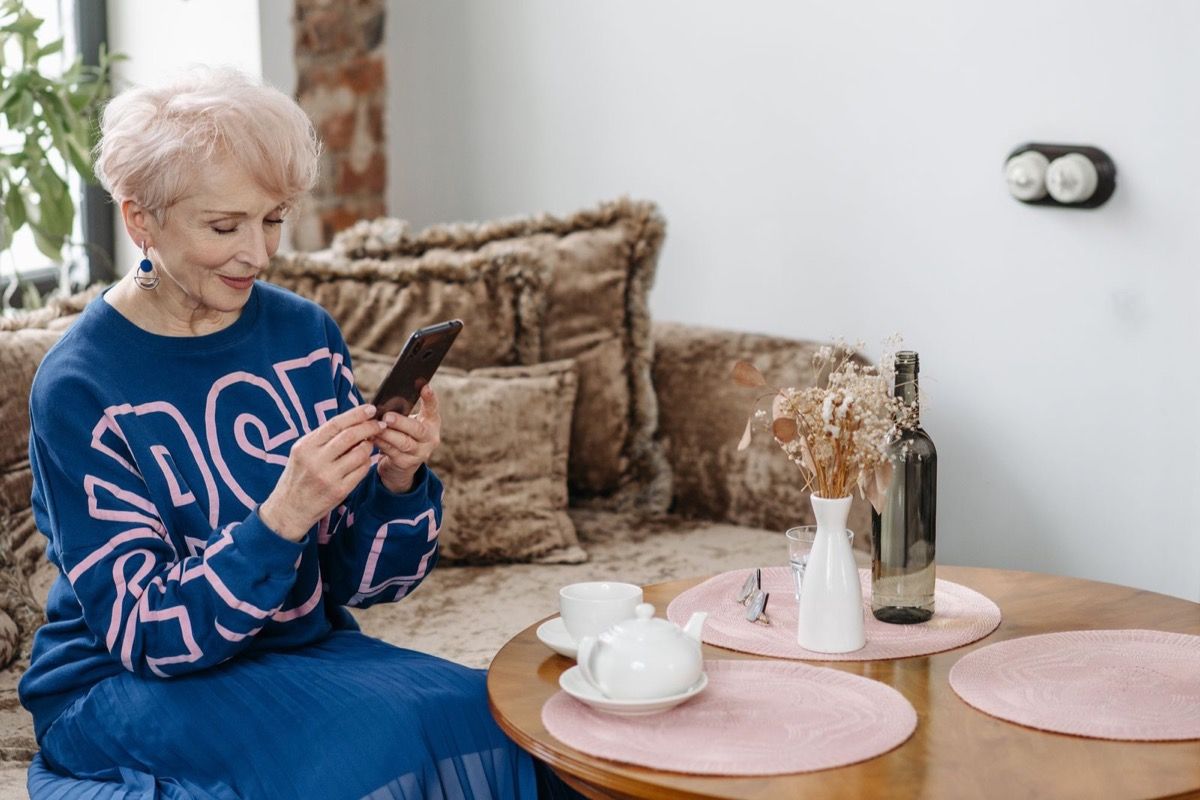
You signed up for a dating app last week. You filled in the profile, chose photos you felt good about, and started a conversation with someone who seemed genuinely interesting. Three messages in, they asked what part of town you live in. You answered without thinking much about it, because it felt like small talk.
It was small talk. But it was also a piece of information that, combined with your workplace, your usual walking route, and the gym visible in one of your photos, starts forming a picture someone could use without your permission.
The uneasy part often comes later. You are brushing your teeth, replaying the conversation, and suddenly the friendly answer feels less small than it did when you sent it.
This isn’t about fear. Most people share details like these because they want to be warm, open, and genuine with someone who seems kind. That instinct is good. The gap is between how much trust exists and how much access you have already given.
This guide is for general educational purposes and cannot guarantee that any platform, setting, or approach will protect your privacy completely. What it can do is give you a structured way to think about what to keep private, what to check, and when sharing becomes lower-risk as trust develops.
For the broader safety foundation, the online dating safety guide covers scams, first meetings, and money requests. This checklist goes deeper into one specific piece: protecting your personal information across the full dating timeline.
Why Privacy Deserves Its Own Checklist
General online dating safety advice tends to focus on the dramatic scenarios: the scammer who asks for money, the catfish using stolen photos, the person who turns aggressive. Those situations matter, and the romance scam warning signs guide covers them directly.
But privacy loss usually happens quietly. It happens in ordinary conversations with people who may be perfectly genuine. You mention your daughter’s name. You share a photo taken at your regular coffee spot. You give out your personal email because the app messaging feels clunky. None of these feel risky in the moment.
The problem is timing. Early in a connection, you don’t yet know whether this person handles information carefully. You don’t know whether they will share your details with others, show up uninvited, search for more about you, or simply turn out to be someone you’d rather not have known where you live.
If you were dating thirty years ago, privacy managed itself differently. You met through mutual friends, shared social circles, or workplaces where reputations were visible. Online dating removes that built-in context. You’re sharing information with someone whose social world, history, and judgment are largely invisible to you at first. That asymmetry makes deliberate privacy decisions more important than they were when social accountability was automatic.
A checklist helps because it separates the decision from the emotion. When you’re enjoying a conversation and feeling hopeful, a pre-made boundary is easier to hold than one you have to invent on the spot.
Information to Keep Private Until Trust Is Established
Some information is easy to share and hard to take back. Until you’ve seen consistent respect over time, not just warmth or charm in the first few conversations, these details are worth holding back:
- Your home address or enough location detail to find it
- Your workplace name or enough job detail to identify your employer
- Your daily routine: when you leave the house, where you walk, which gym, which church
- Financial information: income, savings, property details, bank names, card numbers
- Identity documents: passport numbers, driver’s license, health insurance details
- Family specifics: grandchildren’s schools, adult children’s full names, where relatives live
- Account credentials: passwords, security questions, two-factor codes
You can still be warm. Talk about your work in general terms. Mention your neighborhood broadly. Say you have grandchildren without naming their school.
The line isn’t between openness and secrecy. It’s between sharing personality and sharing access.
People over 50 sometimes feel pressure to prove they are genuine by sharing personal details early. That instinct makes sense. You come from a time when relationships were built on honesty from the start, and you may worry that holding back seems cold or distrustful. But online dating creates a different context. Being genuine doesn’t require being immediately locatable. You can be completely honest about who you are, what you value, and what you’re looking for while keeping the specific details that create physical access private until you know more.
What Ordinary Details Can Reveal
A name and a suburb are usually enough for a determined search to find a street address. A workplace name narrows it further. A gym membership mentioned alongside a morning routine shows someone where you’ll be at predictable times.
Consider a composite version of what ordinary sharing looks like over a few weeks of messaging: you mentioned you retired from teaching at a local high school. You shared that you walk your dog every morning at the park near the library. You sent a photo of your garden with your house number partially visible on the letterbox. Later, the person casually says, “I think I know that park. Is it the one near Maple Library?”
That is the moment privacy stops feeling theoretical. Each detail was given with good intentions in a pleasant conversation. Together they form a pattern that someone could follow physically.
None of it felt reckless at the time. That’s the point. Privacy loss in online dating rarely feels like a mistake while it’s happening.
Most people will not misuse this information. Privacy timing exists for the ones you cannot identify yet.
Photos and Location Privacy
Photos reveal more than faces. Before uploading profile photos or sharing images in messages, the backgrounds, metadata, and context of those photos deserve a brief look.
Common things photos can accidentally show:
- House numbers, street names, or identifiable front doors
- Car registration plates
- Name badges, ID lanyards, or work uniforms with employer logos
- Family members, especially children or grandchildren
- Club or church names on T-shirts, programs, or signage
- Location metadata embedded in the image file (GPS coordinates)
- Regular routine evidence: the same coffee shop, the same park bench, a gym selfie taken at 6 a.m. every Tuesday
Most dating apps strip location metadata from uploaded photos, but not all messaging apps do. If you’re sharing photos directly via text or email, the metadata may still be attached.
One thing people overlook: photos shared during messaging are different from profile photos. Your profile pictures go through the app’s upload process, which often strips metadata. But when you take a photo and send it directly in a chat, through the app or through text once you’ve exchanged numbers, the file may carry its original data. This matters most for photos taken at or near your home.
A Quick Photo Privacy Check
Before uploading or sending a photo, ask:
- Is my house number or street visible?
- Is a business name or location identifiable in the background?
- Does this photo show a family member who has not consented to being shared?
- Would someone be able to figure out where this was taken?
- Does this photo show a pattern, the same place at the same time of day or week?
- If a stranger saved this image and studied the background, would I feel comfortable?
You don’t need to inspect every snapshot like evidence. Before sending a photo taken near home, though, pause long enough to look past your face and into the background.
When to Share Your Phone Number, Email, or Social Media
Moving off the dating platform feels natural as a conversation develops. The platform messaging can be slow, limited, or awkward. Giving someone your number or connecting on social media feels like progress.
It is progress. It is also a decision that hands over new access: a phone number can reveal a full name through caller ID apps; an email address can be searched; a social media profile may show friends, family, check-ins, photos, and location history.
There’s no fixed rule for when this transition is lower-risk. But some signals suggest the timing may be reasonable:
- You have exchanged messages consistently over several weeks, not just a few intense days
- They’ve been willing to video call on the platform first
- They’ve respected boundaries you have set, including small ones
- Their story has been consistent without contradictions or sudden emergencies
- You have done some basic verification, even informally (the verification guide covers respectful ways to reduce uncertainty)
- You’re choosing to share, not responding to pressure or guilt
If someone pushes for your number early and reacts with frustration, guilt, or withdrawal when you set a boundary, pay attention. A patient person can wait. A respectful person doesn’t need immediate off-platform access. For more on readiness signals, boundary scripts, and secondary-number alternatives, the guide on when to give someone your phone number covers the full decision in detail.
A simple way to say it:
“I prefer to keep chatting here for now. Once we’ve talked a bit more, I’m happy to share my number.”
This doesn’t need a long apology. If it creates conflict, the conflict is the information.
The FTC’s consumer guidance on online privacy and security reinforces that controlling when and how you share personal information is a basic consumer protection step, not an unusual or paranoid one.
Dating App Privacy Settings Worth Checking
Most dating apps have privacy settings that limit what strangers can see before you decide to share more. These settings vary by platform, and they change over time as apps update, so specific instructions here would date quickly. But the categories worth checking are consistent across most major apps:
Location precision. Some apps show distance in broad terms; others reveal a precise location. Look for settings that limit location sharing to a general area or hide distance entirely.
Profile visibility. Many apps let you control who can see your profile: everyone, only people you have liked, or only people who match certain criteria. More restrictive visibility means fewer strangers see your profile, but it may also mean fewer potential matches.
Then there are connected accounts. Some apps offer to link your Instagram, Spotify, or other accounts. This can reveal your full name, social circle, location history, or interests you didn’t intend to make public on a dating profile. Consider whether the convenience is worth the additional exposure.
Two smaller settings are easy to overlook. Read receipts and online-status indicators can give someone a sense of your routine or create pressure to respond quickly. Account search settings may let your profile appear in web searches or be discoverable through your phone number or email. Both are often on by default, so they’re worth checking once during setup.
Checking these settings takes five minutes when you first set up a profile, and another few minutes whenever an app updates. Not glamorous work. Useful work.
These settings don’t make a platform private. They reduce what is visible to strangers before you actively choose to share. Think of them as one boundary among several, alongside your own decisions about what information to offer in messages and photos.
There is a second privacy layer, too: what the platform itself does with data. In March 2026, the FTC announced action against Match and OkCupid over allegations that OkCupid shared users’ personal information, including photos and location information, with an unrelated third party contrary to its privacy promises. That does not mean every dating app handles data the same way. It does mean privacy settings are only one part of the picture. Read privacy prompts slowly, limit connected accounts you do not need, and assume that anything uploaded to a dating service may be harder to control than something kept on your own phone.
If You Have Already Shared More Than You Meant To
Maybe you gave out your home address before you realized you wanted to wait. Maybe you shared your full name, workplace, or daily routine in the course of a conversation that felt safe at the time. Maybe you connected on social media and now wish you hadn’t.
This is where embarrassment can get loud. You may lie awake wondering why you answered so quickly, or scroll through your own profile trying to see it the way a stranger would. Early online dating conversations feel more intimate than they are, and the norms aren’t obvious to anyone, especially if you’ve been out of dating for a long time. Conversations that develop over several evenings can feel like weeks of knowing someone. The emotional closeness is real, but it runs ahead of actual trust, which needs time and pattern to confirm.
Worth saying plainly: sharing too soon is common. The useful question is what to do next.
What you can change:
- Passwords and security questions, if you shared anything that could compromise accounts
- Privacy settings on social media: restrict what a specific person can see, or tighten general visibility
- Connected accounts on the dating app: disconnect social media links
- Profile details: remove information you no longer want public
- Blocking or unmatching: available on every major platform if you want to end contact
What you cannot take back:
- A home address already shared
- A workplace already named
- Photos already sent
- Family details already discussed
If you can’t take it back, you can still decide what to do next. Continuing the conversation with firmer boundaries is one option. You might explain that you’re pulling back on personal details for now. Ending the conversation is also reasonable if trust hasn’t developed or if something feels off.
If you are worried they may already know too much, tell one trusted person exactly what was shared. Not for a lecture. For a second set of eyes while you decide whether to block, tighten settings, or keep watching.
If someone uses shared information to pressure, threaten, show up uninvited, or manipulate you, that isn’t a privacy mistake you made. That is their choice. Contact the platform, a trusted person, or local authorities if the situation feels unsafe. The online dating safety guide has broader next steps for situations involving pressure or threats.
A Privacy Rhythm That Lets You Stay Open
Privacy in dating is pacing, not a permanent wall. You share more as trust develops, and trust develops through time, consistency, and respect, not through words alone.
A useful way to think about it: early conversations reveal personality but not access. You share what you enjoy, what matters to you, how you think about life and relationships. You hold back what gives someone the ability to find you, contact you outside your control, or use details against you.
As a connection proves itself over weeks and months, sharing becomes lower-risk because you’ve seen how this person handles boundaries, disagreements, and the ordinary friction of getting to know someone. The right person won’t have pressured you during that period. They won’t have punished you for being careful.
That patience is itself a signal. Someone who respects your privacy timeline is showing you something about how they will treat your boundaries in a relationship. Someone who pushes, guilt-trips, or sulks about your pace is showing you something too.
You don’t need to follow this checklist rigidly. Some items will feel more important than others depending on your situation. What matters is having thought about it before the conversation sweeps you along. A pre-made boundary holds better than one you have to construct in the moment when you’re feeling warm toward someone and wanting to be generous.
If you are still building your dating profile and want guidance on what to include without oversharing, the profile guide for dating after 50 covers that specific stage. And if a conversation ever starts feeling pressured or rushed, the scam red-flags checklist is a quick reference worth keeping nearby.