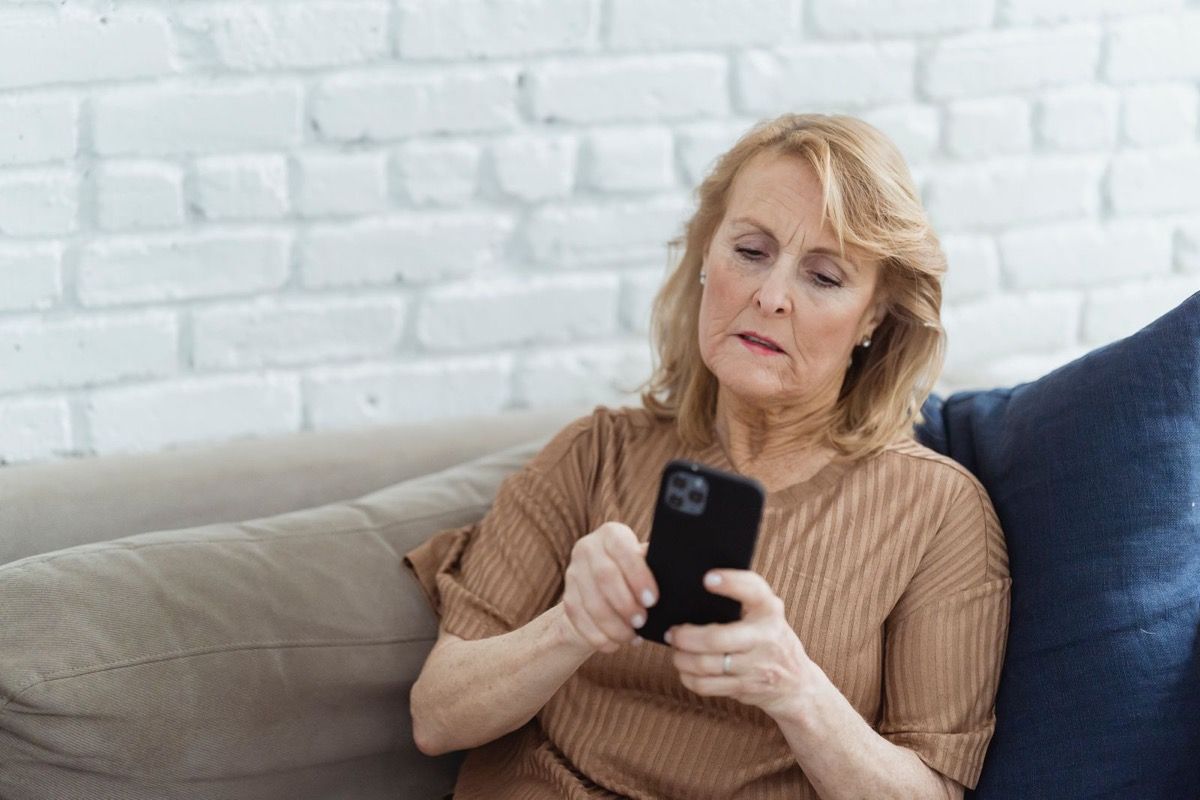
You have been messaging someone for ten days. The conversation has been good. They remember details you mentioned earlier, they ask real questions, and they make you laugh at least once each evening. Tonight they said, “Should we text instead? It’s easier on the phone.”
You paused. Not because you think they are dangerous. Because you are not sure what giving out your phone number actually means now, in a way it didn’t used to mean twenty years ago when the worst case was an awkward phone call you could simply not answer again.
That pause carries something familiar if you have been out of the dating world for a while: the quiet worry that being careful will look like distrust, that the other person will read your hesitation as rejection and move on. You don’t want to seem paranoid. You also don’t want to hand over access you can’t take back.
That tension is your judgment doing its job. It deserves a real answer, not just the pressure of the moment.
If someone loses interest because you needed a little more time, the phone number was probably not the real issue. Pace was.
This article is for people in that pause. Not for the person who already decided no, and not for the person who already shared without a second thought. For the person in the middle, weighing warmth against uncertainty and wondering what counts as reasonable.
Why This Decision Feels Bigger Than It Should
Sharing a phone number used to be unremarkable. You met someone at a dinner party, liked talking to them, and wrote your home number on a napkin. The stakes felt manageable because you shared social circles, and social circles provided a kind of ambient accountability.
Online dating removes that context entirely. The person asking for your number exists outside your world until you choose to bring them closer. You can’t ask a mutual friend what they’re like when frustrated. You can’t run into them at the grocery store and notice how they treat the cashier. All you have is the conversation on the screen and whatever patterns have emerged from it. This is one reason safe dating practices matter more in online contexts than they did when social circles provided built-in accountability.
A phone number connects to more than phone calls. Depending on what is already public or connected to that number, it can sometimes help someone find a full name, a general location, linked social media accounts, or older public-record-style information. It also moves the conversation outside the dating platform, where moderation tools, reporting features, and conversation records may be harder to use. The online dating privacy checklist covers the full range of personal information worth protecting at each stage of a new connection.
None of this means sharing is reckless. It means the decision carries more weight than it did in a pre-internet context, and your hesitation is proportional rather than paranoid.
What Changes When You Share Your Number
Understanding what you’re actually handing over helps separate the emotional decision from the practical one.
What someone can learn from a phone number
A phone number, depending on what is connected to it and how determined the person is, may help reveal:
- Your full legal name through caller ID or lookup services
- Social media profiles or accounts connected to that number
- A general geographic clue, such as an area code or location attached to public records
- Older address or household information, depending on what data brokers or public-record sites already show
- Other people associated with that number in searchable records
Most people will never search your number. But the access exists for anyone motivated enough to use it, and at ten days of messaging you can’t yet know someone’s motivations fully.
What you lose from the platform
Dating platforms, for all their limitations, may offer protections that become harder to use once you move to phone calls or texts:
- Conversation history may remain on the platform, which can help if you need to report behavior later
- Reporting tools may let you flag harassment, threats, or deceptive profiles to moderators
- Blocking on the platform can limit visibility and contact inside that app, while blocking a phone number does not erase information already gained
The FTC’s consumer guidance on online privacy and security reinforces that limiting when and how you share personal information is a basic consumer-protection practice. The FTC has also noted that romance scammers commonly push to move conversations off dating platforms and onto private messaging apps, because doing so removes the fraud-detection systems and reporting tools the platform provides.
The vast majority of people who ask for your number have straightforward intentions. Still, understanding why platforms provide those tools helps you make a more informed choice about when to leave them behind.
This guide is for general educational purposes and cannot verify whether a person is safe or unsafe.
Readiness Signals Worth Watching For
There is no calendar that tells you when trust has developed enough to share your number. Five weeks of sporadic messages may mean less than two weeks of consistent, reciprocal conversation. What matters are patterns, not elapsed time.
Signals that suggest lower risk
- Consistency over time. Their story stays coherent across conversations. They remember things you mentioned. They show up at roughly the pace they said they would. Consistency doesn’t prove trustworthiness, but inconsistency is useful information.
- Willingness to video call on the platform first. Someone who will appear on camera, in real time, on the platform you both already use is reducing your uncertainty without asking you to give up anything in return. It doesn’t prove someone is trustworthy, but it’s a reasonable intermediate step.
- Respect for small boundaries. How someone handles minor requests tells you something about how they’ll handle bigger ones. If you said you can’t talk after 9 p.m. and they reliably respect that, it is a small data point in the right direction.
- No pressure, guilt, or urgency about the number itself. A person who is comfortable waiting doesn’t need to explain why you should trust them faster. Someone who frames your caution as coldness or paranoia is telling you something about their relationship to your boundaries.
- Absence of financial or emotional emergencies. If your entire connection has been colored by their crises, that pattern is worth noticing before you hand over new contact access.
Signals that suggest waiting
- They have refused or repeatedly dodged a video call
- The conversation has been intense but very short (days rather than weeks)
- They have made comments about your caution that felt like pressure or subtle shaming
- Their story has shifted or contained contradictions you noticed but chose not to ask about
- You feel pulled toward sharing because of their expectation rather than your own readiness
None of these prove bad intentions. All of them are reasons to let more time pass before giving someone a direct line to you outside the platform. If several of these signals appear together, the romance scam warning signs guide can help you assess whether the pattern goes beyond ordinary impatience.
What to Say When You Are Not Ready Yet
The hardest part of setting a boundary is often finding the words for it in the moment, when you’re enjoying the conversation and don’t want to sound suspicious or cold.
You do not owe an explanation. A simple statement is enough:
“I like to keep chatting here until we’ve talked a bit longer. Once I feel ready, I’m happy to share my number.”
If they accept that without issue, good. If they ask why, you can say:
“It’s just my preference for early conversations. Nothing personal about you.”
For someone who pushes harder:
“I’ve noticed you’ve brought this up a few times. I’m not comfortable sharing my number yet. If that is a problem, it’s worth talking about directly.”
And if someone responds to any of these with guilt, withdrawal, or anger:
That reaction itself is information. A person who respects your pace will not punish you for having one. If setting a basic boundary creates conflict, you’ve learned something important about this connection before it cost you anything.
These are not confrontational statements. They are ordinary adult communication. The discomfort you might feel when using them usually comes from a worry about seeming rude, not from the statements themselves being rude. They aren’t.
Alternatives to Sharing Your Personal Number
If you want to move off the platform but aren’t ready to share your primary phone number, a secondary number is one option. This is not a requirement, and it doesn’t make the interaction safe. It simply limits what someone can learn from your number alone.
Common options include:
- A call-forwarding number. Some services let you use a separate number that forwards to your main phone, so the other person does not see your primary line.
- A secondary SIM or prepaid number. This can separate dating conversations from your everyday number, though costs, registration details, and privacy protections vary.
- An app-based number. Some apps provide temporary or longer-term numbers. Check the current provider terms before relying on one, because features, fees, and data practices can change.
Limitations worth knowing: secondary numbers don’t hide your voice, your personality, or information you share in conversation. They may reduce reverse-lookup exposure and keep your primary line private, but they are one layer, not a complete solution. If someone turns out to be untrustworthy, a secondary number reduces their access but doesn’t eliminate the relationship dynamic that made them untrustworthy.
Don’t feel obligated to set up a secondary number. Many people share their real number once they feel ready and never have a problem. The option exists for people who want an intermediate step, not as a standard everyone must follow.
What to Do If Sharing Does Not Go Well
Sometimes you share your number and the situation develops in a way you didn’t expect. Maybe they text too frequently. Maybe they call at odd hours. Maybe the tone shifts once the conversation moves off the platform. Maybe you simply realize you moved faster than you wanted to and now feel exposed.
Here is the part no one talks about openly: the embarrassment. You might feel foolish for sharing, even though you made a reasonable decision with the information you had at the time. That feeling can keep people from blocking, reporting, or telling a friend. Don’t let it.
What you can do:
- Block the number. Every phone has this built in. It doesn’t erase information they already have, but it stops incoming contact.
- Report to the dating platform. Even though the problematic behavior happened off-platform, most apps still allow you to report the profile. They may not act on off-platform behavior, but the report creates a record.
- Document the behavior. Screenshots of texts, call logs, and message timestamps are useful if you later need to involve platform support or authorities.
- Tell someone you trust. Embarrassment often keeps people from mentioning a situation to a friend or family member. Say it out loud to someone. A second perspective can help you assess whether the behavior crosses a line you were minimizing.
- Contact local authorities if you feel threatened. Harassment, stalking, and threats are not dating problems. They are legal ones.
If you are dealing with someone who has asked for money or financial information, the guide on what to do when someone asks for money offers specific next steps. If you’ve already shared more than you intended, the privacy checklist linked earlier in this article covers steps for regaining control of your information after the fact.
A Slower Pace Is Not a Rejection
There is a particular kind of self-consciousness that shows up in dating after 50. You worry that being careful makes you seem closed off, distrustful, or not ready. You wonder whether the other person will interpret your caution as disinterest and move on to someone easier to reach.
That worry is real. It also deserves some scrutiny.
If you’ve been single for years, or you’re returning to dating after a long marriage ended, the rules feel unfamiliar. You may not have had to protect a phone number from anyone since you were twenty. The instinct to just hand it over comes partly from wanting to prove you’re open and partly from not wanting to seem like someone who got hurt and never recovered.
But a person who leaves because you took a little more time to feel comfortable was never going to be patient with your other boundaries either. Pace-matching is a relationship skill, not a screening failure.
Taking time to decide is not suspicious, cold, or a sign that you’re doing this wrong. It is an ordinary act of self-knowledge: you know that trust builds through consistent behavior over time, and you are choosing to let that process work rather than skipping ahead because the conversation felt warm.
The online dating safety guide covers the broader decisions involved in dating safely after 50. This article focused on one specific moment in that larger process. When you do share your number, it should feel like something you chose, not something you conceded.